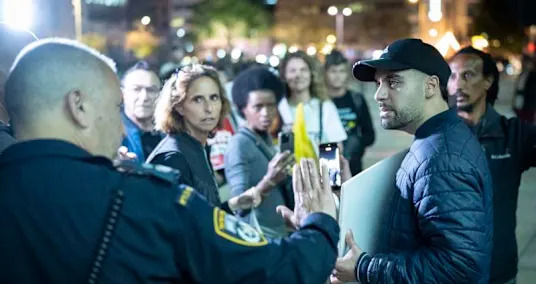
Protests took place in Tel Aviv, Jerusalem, Haifa, and Beersheba, as a survey found broad but uneven support among Jewish Israelis for Operation Roaring Lion.
Israel Police arrested 21 anti-war protesters Saturday night as demonstrations against the conflict with Iran expanded in multiple cities despite restrictions on public gatherings.
Protests took place in Tel Aviv, Jerusalem, Haifa, and Beersheba, with hundreds of participants reported in Tel Aviv and Jerusalem and about 100 in Haifa, marking the largest turnout since weekly demonstrations began. Authorities said 13 people were arrested in Tel Aviv and eight in Haifa.
Police said the gatherings were not approved under Home Front Command regulations that ban events with more than 50 people. Officials said the increase in turnout followed calls by groups opposing the government to protest despite the restrictions.
“During a situation assessment that took place at the scene with a Home Front Command representative… it was clarified that there was a real risk to human life and accordingly, Yarkon [precinct] police commander Tzachi Sharabi ordered the gathering to be dispersed,” police said.
Hadash-Ta’al chairman Ayman Odeh, an Arab lawmaker involved in the protests, criticized the police response, calling officers fascists “in the service of the government” and saying they were afraid of “the heroic citizens who went out, despite everything, to make their voice heard.”

Survey shows broad, uneven support for war
The demonstrations come as a March 2026 survey by the Israel Democracy Institute found broad but uneven support among Jewish Israelis for Operation Roaring Lion. Support was strongest on the Right at 87% and about half on the Left.
The survey also found that Jewish and Arab respondents largely agreed that Iran’s resilience has been stronger than expected. Most Jewish respondents said Israeli society could sustain the campaign for up to one month, while 28% said as long as needed. Arab respondents were less optimistic about how long the public could endure the conflict.
A majority of Jewish respondents said Prime Minister Benjamin Netanyahu’s decision was driven by security considerations, while most Arab respondents viewed it as political.
latest_posts
- 1
 Photos of amputees in Gaza, struggling to survive after losing limbs to Israeli airstrikes
 - 2Find Successful Magnificence Items for Sparkling Skin
- 3'The Housemaid' movie with Sydney Sweeney and Amanda Seyfried premieres this month. What the stars have said about the psychological thriller.
- 4Figure out How to Recognize Early Indications of Depressions
- 5Why is the Artemis 2 rocket launch different from all other rocket launches?



- Make your choice for a definitive Christmas getaway destination!
- Instructions to Expand Your Smash 1500's Presentation: Tips and Deceives
- Miley Cyrus flashes a diamond ring on the red carpet, sparking engagement rumors with Maxx Morando: A timeline of their four-year relationship
- FDA proposes use of sunscreen ingredient popular in other countries
- Carrying on with a Sans plastic Way of life: Individual Examinations in Maintainability
- Overseeing Individual budgets Successfully
- Home Remodel Administrations: Change Your Residing Space
- Famous Rough terrain Vehicles for 2024
- US EPA will reassess safety of herbicide paraquat, says its chief


