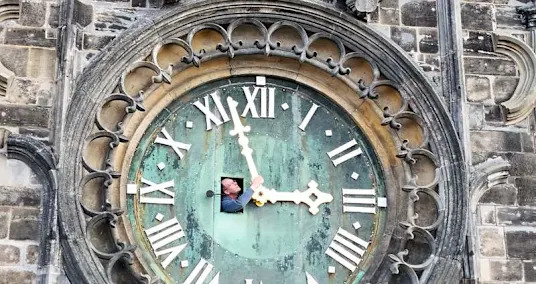
Clocks across the majority of European countries are set to go forward by one hour early on Sunday as the continent moves to daylight saving time, also known as summer time.
Clocks in most European nations including Germany advance by one hour at 2 am (0100 GMT) to 3 am, heralding longer evenings and brighter days.
This means that for the coming months parts of Europe will be on Central European Summer Time (CEST), before moving back to Central European Time (CET) in the autumn, when clocks go back again by an hour on October 25.
The aim of the change is to make better use of daylight in the shorter days of the winter in the northern hemisphere.
The signal for the automatic changeover of the clocks in Germany comes from the Federal Institute of Physics and Metrology (PTB) in the northern city of Braunschweig, also known as Brunswick in English.
The institute's experts ensure that radio-controlled clocks, station clocks and many industrial clocks are supplied with the signal via a long-wave transmitter called DCF77 in Mainflingen near Frankfurt.
latest_posts
- 1
 Flourishing in a Cutthroat Work Market: Vocation Methodologies
 - 2A somber Thor is returning for 'Avengers: Doomsday': Watch the dread-filled teaser
- 3Grasping the Elements of Medical caretaker Pay rates: Factors That Shape Your Pay
- 4Germany's Pistorius: NATO protects Europe from Iranian missiles
- 5Amy Poehler's podcast is a hit. It's also a Trojan horse for talking about women and aging.




- Opening Monetary Information: Your Exhaustive Manual for Finding out about Individual budget
- I binged all 24 Hallmark Christmas movies in less than 30 days. I emerged a changed man.
- James Webb Space Telescope finds strongest evidence yet for atmosphere around rocky exoplanet: 'It's really like a wet lava ball'
- Novo Nordisk gears up for December Ozempic launch in India, sources say
- Virtual Route d: A Survey of \Exploring On the web Stages\ Web Administration
- Palestinians protest against Israel's new death penalty law
- 'All Her Fault' ending explained: The shocking conclusion to the psychological thriller inspired by true events
- Europe’s EV Boom Was Real in 2025. The Real Fight Starts In 2026
- Geminid shooting stars: One of 2025's most exciting meteor showers begins tonight