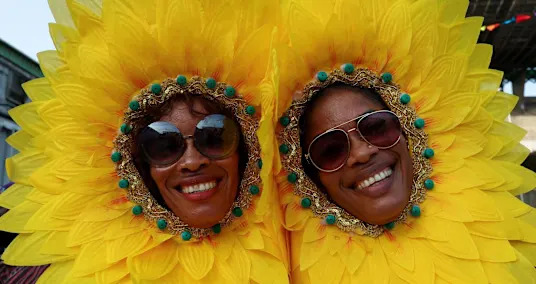
Elaborate costumes, blaring music and vibrant processions took over Nigeria's Lagos Island on Monday as the annual Fanti Carnival hit the streets.
The festivities have lit up Lagos' financial hub for more than two centuries, celebrating the legacy of the Afro-Brazilian returnees who once settled in the city.
This year's carnival featured musical performances, bedazzled horses, huge dragons and dancing stilt walkers.


In the 1800s, some formerly enslaved Africans and their descendants migrated back to the continent from countries like Brazil and Cuba.
Many Afro-Brazilians settled on Lagos Island, bringing with them new customs.

These customs fused with those of Nigeria's Yoruba people, leading to creations like the Fanti Carnival.
On Monday, carnival attendee Glamour Sandra told the AP news agency that she loved "the energy, the artistic splendour, the creativity" of the event.


"It is important that we preserve this, so that... generation after generation everybody will get to understand the importance of this and how Brazilians and Lagos came to be," carnival-goer Ademola Oduyebo told AP.
Youngsters appear to be heeding this message - several children and teenagers participated in the Monday's parades, decked out in creative costumes.

The celebration is sustained by seven historic associations, which are rooted in different areas of Lagos Island. One carnival-goer wore an eye-catching outfit, bearing each of the associations' names.

Each community can be distinguished by its signature colours - members of the Lafiaji association always wear red and white.


The carnival's organisers are immensly proud of the event, which will return again next April.
They describe it as "neither wholly Brazilian nor wholly Yoruba, but entirely its own".

Go to BBCAfrica.com for more news from the African continent.
Follow us on Twitter @BBCAfrica, on Facebook at BBC Africa or on Instagram at bbcafrica
BBC Africa podcasts
latest_posts
- 1
 Anthony Joshua's driver charged over Nigeria crash that killed two
 - 2Limited Rain Chances in Brazil Boost Coffee Prices
- 3Medtronic has 'significant firepower' for multiple acquisitions, executives say
- 4Independence from the rat race for Recent college grads: Systems and Tips
- 5Manual for Savvy Home Lighting Framework: Lights up Your Space


- European nations criticise Israel’s death penalty plans
- January’s full wolf supermoon and the Quadrantid meteor shower will start off the new year
- Iran’s Crown Prince Reza Pahlavi backs protests: Join your fellow citizens in the streets
- EPA watchdog finds nation’s most contaminated sites are vulnerable to flooding, wildfires
- Family Matters: Tips and Guidance for Effective Nurturing and Everyday Life
- Triumph’s Gorgeous, Super-Affordable and Approachable New Street Motos Share a Heart But Not a Soul
- Indonesian Mega-Farm Drives Surge in Deforestation
- Are protests pushing Iran's Islamic regime toward a tipping point?
- The most effective method to Decisively Use Open Record Rewards