The post came in reply to a post from the United Nations Relief and Works Agency (UNRWA), saying that freshwater supplies in Gaza were "severely limited and polluted."
Gaza is receiving over 70,000 cubic meters of water per day, the Coordinator of Government Activities in the Territories (COGAT) claimed in an X/Twitter post on Sunday.
The post came in reply to a post from the United Nations Relief and Works Agency (UNRWA), saying that freshwater supplies in Gaza were "severely limited and polluted," due to a collapse in sewage infrastructure.
COGAT described UNRWA's claims as being "false narratives."
COGAT coordinates Gaza water line repair
"The facts speak for themselves," COGAT said. "When a water line issue was reported last week, we coordinated a rapid repair to restore full functionality immediately."
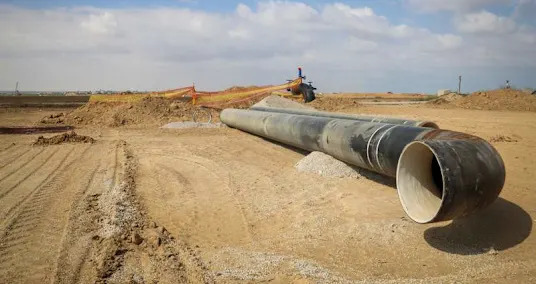
COGAT also said that there were four active pipelines leading into Gaza: Nahal Oz, Bani Suheila, Birkat Sa'id, and the Emirati line.
"While local groundwater faces challenges, we continue to repair infrastructure, even during combat, to ensure civilians access to safe, potable water," COGAT claimed.
latest_posts
- 1
 Huge Iranian missile fragments, intercepted by air defenses, lay scattered across Israel, West Bank
 - 2'I was diagnosed with incurable brain cancer on holiday'
- 3Spanish bishops and government sign deal for compensation of church sexual abuse victims
- 4High Court freezes government move to shutter Army Radio pending ruling
- 5Haifa refinery said hit in latest Iranian missile barrage




- Bayer reports positive results for blood thinner after 2023 setback
- Move. Cheer. Dance. Do the wave. How to tap into the collective joy of 'we mode'
- Big majority in Germany call Berlin's efforts on gas prices too weak
- Conquering Language Boundaries: Individual Accounts of Multilingualism
- Italy Brings In New Measures In 2026 To Tackle Overtourism
- This star-forming galaxy is blowing out powerful winds topping 2 million mph
- Nepal’s youngest premier sworn in after releasing new rap song about unity
- I visited the largest collection of public telescopes in the US in Oregon's high desert, and the dark skies blew me away
- EU-funded BioSupPack project turns brewery waste into bioplastics