When you buy through links on our articles, Future and its syndication partners may earn a commission.

Thin lids of ice could have sheltered lakes on ancient Mars and kept surface water liquid even as the Red Planet's climate became freezing, according to new research that could solve one of the greater paradoxes of Martian history.
The findings are based on data collected by NASA's Mars Curiosity rover in Gale crater and then fed through a climate model.
"If similar patterns emerge across the planet, the results would support the idea that even a quite cold early Mars could sustain year-round liquid water, a key ingredient for environments to be suitable for life," said Rice University's Eleanor Moreland, who led the research, in a statement.
Mars is covered in the relics of a watery past — dried up river and lake beds, channels, deltas and even what look like shorelines to an ancient sea. There is a prodigious amount of evidence that liquid water once ran on the Red Planet's surface, which initially led to a hypothesis that Mars was once warm and wet.
While Mars, four billion years ago, may have been warmer than it is today, maintaining these temperatures would have required a much thicker carbon dioxide atmosphere than what's seen at present. That's especially because back then, the sun was much weaker, shining only three-quarters as bright as it does today. This simple fact has led planetary scientists to question whether Mars really was ever warm, at least for long periods of time. Consequently, the warm and wet paradigm for Mars has gradually been replaced by a picture of a planet that was cold yet somehow still wet.
This is the apparent paradox at the heart of Mars' ancient history. We see evidence for liquid water even when Mars should have been too cold for liquid water.
So, planetary scientists have been looking for ways in which Mars could have supported liquid water while not being very warm.
Moreland teamed up with Sylvia Dee, an Earth climate scientist at Texas' Rice University. Dee had previously developed an Earth climate modeling tool called Proxy System Modeling, which used evidence from tree rings and ice cores to interpret Earth's climate history.
Of course, Mars doesn't have trees, and no ice cores have been obtained, but Moreland, Dee and colleagues were able to adapt the Proxy System Modeling for Mars, using data gathered by Curiosity on rock and mineral records to act as proxies for Mars' ancient climate. The result was the Lake Modeling on Mars with Atmospheric Reconstructions and Simulations, or LakeM2ARS model.
"It was fun to work through the thought experiment of how a lake model designed for Earth could be adapted for another planet, though this process came with a hefty amount of debugging when we had to change, say, gravity," said Dee.
Moreland's team ran 64 different simulations using the LakeM2ARS model, each one simulating a hypothetical lake within the 96-mile-wide (154-kilometer-wide) Gale crater under conditions believed to have existed on Mars 3.6 billion years ago. Each simulation depicted the lake for 30 Martian years, which is equivalent to about 56 Earth years.
In some of the tests, the lake froze solid in winter, but in other cases the lake would develop a thin layer of ice that would thermally insulate the liquid body below, like a natural blanket. In spring and summer the ice lid would melt, and then return the next winter, with the overall volume of liquid water in the lake barely changing. In the simulations, this allowed the lake to remain stable for decades while temperatures dropped to freezing.
"When our new model began showing lakes that could last for decades with only a thin, seasonally disappearing ice layer, it was exciting that we might finally have a physical mechanism that fits what we see on Mars today," said Moreland.
While the results of the modeling do not mean that Mars never had warmer periods during its early history, they do explain how liquid water could have persisted even after those warm periods had ended.
The findings were published in the Dec. 29, 2025 issue of AGU Advances.
latest_posts
- 1
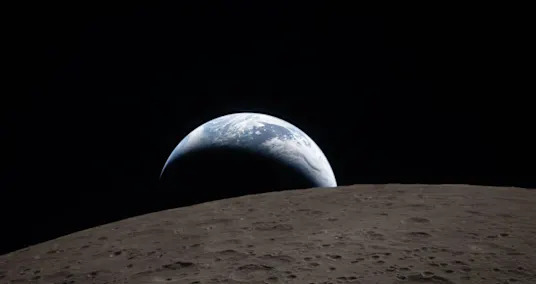
 Artemis 2 captures historic 'Earthset' photo | Space photo of the day for April 7, 2026
 - 2Instructions to Expand Your Advantages from an Open Record Reward
- 3NASA will bring space station crew home early after medical issue
- 4Somaliland denies trading recognition with Israel for accepting Gazans
- 5From record warming to rusting rivers, 2025 Arctic Report Card shows a region transforming faster than expected



- How HIV/AIDS got its name − the words Americans used for the crisis were steeped in science, stigma and religious language
- Gov’t approves millions for border cities in North under Hezbollah fire
- Mont Blanc road tunnel reopens to traffic after 15 weeks of repairs
- Vote In favor of Your Favored Keeping an eye on
- New India programme supports tribal families hosting tourists
- Why home maintenance deserves a spot in the annual health and budget plans
- 'Seditious behavior': Trump accuses Democrats who made video reminding the military not to follow illegal orders of a crime — but is it?
- Finding Ideal Date Spots for Two or three Encounters
- This Asian country is the next hot travel destination, and this is one of its best hotels